If you’ve ever walked into a space designed to hold super specific temperature, humidity, and gas mix levels—think a chamber for curing aerospace composites, storing high-value pharmaceuticals, or even testing fresh produce for long-haul transport—you know it’s not just a box. For us, as a controlled atmosphere engineering customized chamber supplier, that space is a precision tool, and its thermal insulation is the backbone of how it does its job. Over the past 12 years of building custom chambers for every industry from biotech to specialty food processing, I’ve seen firsthand how cutting corners on insulation turns a $50k project into a $20k paperweight that can’t hit its core requirements. Controlled Atmosphere Engineering Customized
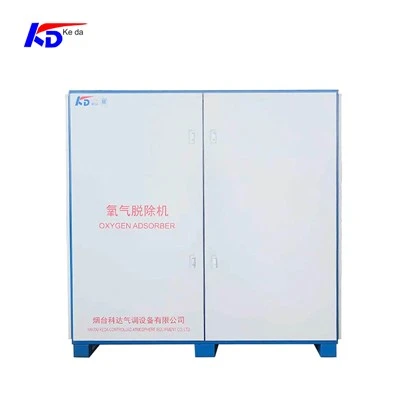
Let’s start with the basics most people don’t get: controlled atmosphere (CA) chambers aren’t just cold rooms. Unlike a standard walk-in fridge that keeps things cool for a few hours, our custom builds have to lock in a mix of gases (often nitrogen, argon, or CO2) while holding temperatures accurate to within ±0.5°C or even ±0.1°C for sensitive stuff like vaccine storage or composite curing. Add in the fact that some of these chambers run at -80°C (ultra-cold for genetic sample storage) and others at +180°C for industrial curing, and thermal insulation stops being a “nice add-on” and becomes non-negotiable. First rule of thumb for any CA chamber: insulation has to prevent two main headaches—temperature drift that throws off your gas mix, and energy waste that makes your operation financially unfeasible.
Wait, why gas mix is tied to insulation, you ask? Let’s break that down. If your chamber has a hot spot or a cold spot, the air inside will circulate unevenly. For example, if you’re storing apples in a CA chamber to slow ripening, you need the O2 level to stay at 1.5% and CO2 at 3% uniform across every shelf. A temperature fluctuation of just 1°C can make one part of the chamber absorb more O2 than another, throwing the mix off, and then you’re constantly pumping in extra gas just to compensate—wasting money and defeating the purpose of a controlled system. That’s where insulation comes in: it’s the barrier that keeps the internal temp stable enough to avoid that kind of uneven air movement and gas shift.
Now, let’s get into the specific requirements that our team walks through with every client, because no two custom chambers are the same. First up is insulation material selection, and this isn’t a one-size-fits-all game. For ultra-cold chambers (-50°C and below), we use extruded polystyrene (XPS) with a closed-cell structure—open-cell would suck in moisture, which freezes and destroys the insulation’s ability to block heat transfer. For mid-range temp chambers (-10°C to +50°C), polyurethane (PU) foam is our go-to; it has a higher R-value per inch than XPS, so you can build a thinner wall without losing insulation power, which is huge if the client has limited space for their chamber. For high-heat chambers (+100°C and above, like those for composite curing), we use mineral wool—PU foam breaks down at high temps, so mineral wool’s fire resistance and heat stability make it the only safe, effective pick.
Next is wall thickness, and this is where we tailor it to not just the operating temp, but also the size of the chamber. A small 2m x 2m chamber for lab use running at -80°C doesn’t need the same wall thickness as a 10m x 20m chamber for industrial frozen food storage at the same temp. For our ultra-cold lab chambers, we usually go with 150mm of XPS for the walls and ceiling, plus 100mm for the floor (since heat rises, the floor takes a hit from the ground below). For a mid-temp food storage chamber, we cut back to 100mm PU foam, which is enough to keep temp stable without overbuilding. For high-heat industrial chambers, we use 200mm of mineral wool, paired with a stainless steel outer shell to handle the heat.
But here’s the part most generic suppliers miss: insulation density and installation precision. It’s not just about the thickness of the foam or board—it’s about how tightly it’s packed and whether there are any gaps. A 1cm gap in a 10m wall is a massive thermal leak, and that’s enough to cause consistent temp drift. On every custom build, our guys spend extra time sealing every joint between insulation panels with a specialized thermal sealant, and we use a density meter to check that every inch of foam is at the exact density we specified (too low, and the insulation is weaker; too high, and you’re wasting material and space). That precision is non-negotiable for clients who need 24/7 operation—think a pharmaceutical company storing cell samples that can’t tolerate even a 0.5°C shift, or a food processor that can’t afford to have their entire batch go bad because of a temp spike.
Then there’s the insulation’s effect on air tightness, which is a core requirement for CA chambers. Thermal insulation and air tightness go hand in hand—if your insulation has tiny air pockets (which is common with low-quality foam), those pockets act as little “convection cells” that let heat move through, and they also make it harder to maintain your gas mix. Our insulation materials have closed-cell structures that don’t absorb air, so we can maintain the ±1% gas concentration accuracy that most of our clients require. For example, a craft brewery we work with had an old CA chamber that was leaking 10% of its CO2 daily because of bad insulation that had gaps. When we built them a custom chamber with our closed-cell PU insulation and air-tight seals, that leak dropped to less than 0.5% per day, cutting their gas costs by 40% in the first year.
Another big one is condensation control, which ties directly to insulation performance. If your chamber is running at a temp that’s way lower than the ambient air outside (say, a -20°C storage chamber in a hot, humid warehouse), the outer surface of the chamber can get cold enough to draw condensation from the air. Condensation leads to mold, corrosion on the chamber shell, and even insulation degradation over time. So we add a vapor barrier layer to the outside of the insulation—usually a layer of aluminum foil or a high-density plastic sheet—that blocks moisture from seeping in. For ultra-cold chambers, we even add a secondary vapor barrier on the inner side of the insulation to stop moisture from the inside of the chamber (if it’s humid) from getting in.
Wait, what about dynamic vs. static operation? That’s a factor most people don’t consider, but it’s super important. Some of our chambers run statically—meaning they hold a fixed temp and gas mix for weeks, like a long-term storage chamber for blood samples. Others run dynamically, meaning temp and gas levels change on a schedule—like a chamber for curing composites, where you heat it to 150°C, hold it for 8 hours, then cool it down to room temp. For dynamic chambers, we have to make sure the insulation can handle temperature cycling without breaking down. PU foam can crack if it’s heated and cooled too quickly, so for dynamic high-heat chambers, we use a specialized heat-resistant PU blend that’s designed to handle cycling, or mineral wool that’s more durable under temp changes. We also test every dynamic chamber we build with 50+ full temperature cycles before delivery, just to make sure the insulation doesn’t fail.
I should also mention something that comes up all the time with clients: energy efficiency. Sure, good insulation costs a bit more upfront, but for a 24/7 operating chamber, that cost pays for itself fast. Our clients that have switched from generic chambers to our custom insulated builds see energy savings of 30-50% annually because the chamber doesn’t have to run its cooling or heating system non-stop to compensate for thermal leaks. That’s a huge deal for industrial clients with big chambers—one of our manufacturing clients has a 12m x 8m composite curing chamber that runs 16 hours a day, and their energy bill dropped by $12k a year after we insulated it properly.
But here’s the thing about custom CA chambers: the requirements aren’t just technical—they’re tied directly to what the client is using the chamber for. A lab that stores rare cell lines is going to need way higher insulation precision than a farm storing apples, right? The cell line lab might need temp accuracy to ±0.1°C, while the apple farm is fine with ±1°C. So we never pull a one-size-fits-all insulation spec off the shelf; we sit down with the client, ask them all the right questions: What temp range do you need? How often will the temp change? What gas mix do you need to maintain? How big is the chamber? Is it going to be indoors or outdoors? All of that shapes the insulation we use.
I remember a client a couple years back who came to us with a problem: they were testing a new type of battery that needed a CA chamber running at +120°C, with 0% O2, for 72 hours straight. Their old supplier had built a chamber that would only hold the temp for 8 hours before drifting, and the O2 would start seeping in, ruining their battery tests. When we did a walkthrough, we realized the old supplier had used regular PU foam, which breaks down at +120°C, and they only used 100mm instead of the 150mm high-heat PU we recommended. We built them a custom chamber with 150mm of heat-resistant PU insulation, a double vapor barrier, and air-tight seals, and their tests have been running perfectly for over 2 years now. That’s the kind of problem-solving we do with every build.
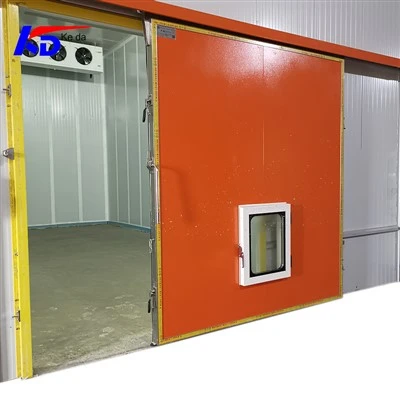
Another common misconception: people think insulation is just about the walls, but the floor and ceiling matter just as much. If you have a chamber sitting on a concrete floor, the concrete is a huge thermal bridge—heat will transfer through the floor to the ground, or cold will transfer up from the ground into an ultra-cold chamber. So we always add insulation under the chamber’s base, not just around the sides. For a chamber sitting outdoors, we add insulation to the roof too, because direct sunlight can heat the top of the chamber and cause temp fluctuations. Even the door is a big one—most generic chamber doors use thin insulation and basic rubber seals, but our custom doors have thick insulation cores and magnetic air-tight seals that close completely, no gaps around the edges. A bad door seal is like leaving a window open all the time, wasting energy and messing up gas levels.
Let me wrap this up with what I always tell new clients: thermal insulation for custom CA engineering chambers isn’t a line item to cut costs on—it’s the foundation that makes the entire chamber work. Too many suppliers try to use cheap materials or skimp on thickness to win a bid, but that comes back to bite the client with wasted energy, failed processes, and expensive repairs down the line. For us, every insulation spec we choose is tailored to the client’s exact needs, not a generic template, because we know that a chamber that hits its thermal and gas requirements is a chamber that delivers real value for their operation.
If you’re in the market for a custom controlled atmosphere engineering chamber, whether it’s for lab storage, industrial processing, food preservation, or something else entirely, the insulation is the first thing you should ask about. Don’t be afraid to dig into details: what material are you using? What thickness? What’s the air tightness rate? How do you test for temp stability? We’d be happy to walk through all of that with you, no pressure, just honest advice based on hundreds of successful builds. Reach out to talk through your project, and we’ll build you a chamber that’s not just custom, but built to last and perform exactly what you need.
Oxygen Adsorbers References
ASHRAE Handbook: Refrigeration, American Society of Heating, Refrigerating and Air-Conditioning Engineers, 2021.
Controlled Atmosphere Technology for Food Preservation, 2nd ed., Academic Press, 2019.
International Organization for Standardization (ISO) 14644-1: Cleanrooms and associated controlled environments, 2015.
Yantai Keda Zhixian International Trade Co., Ltd.
As one of the leading manufacturers and suppliers of controlled atmosphere engineering customized in China, we have world-leading production equipment and strong manufacturing capabilities. Please feel free to buy high-grade controlled atmosphere engineering customized for sale here from our factory.
Address: No.18-2, Wuhan St, Yantai ETDZ, Yantai, Shandong, China
E-mail: ytkeda2026@163.com
WebSite: https://www.kedacastorage.com/
