If you’ve ever spent time on highways or construction sites after dark, you’ve probably noticed that flatbed trailers look different from enclosed trucks or regular box vans. At [Your Company Name], we’ve been supplying flatbed trailers to construction companies, logistics firms, and heavy equipment operators for over a decade—so we know firsthand that lighting isn’t just a small detail on these workhorses; it’s a non-negotiable safety feature that keeps drivers, cargo, and crews protected. A flatbed’s open design means it’s far more exposed than other vehicles, making proper lighting critical for visibility, compliance, and preventing costly accidents or cargo loss. Let’s break down exactly what lighting requirements your flatbed trailer needs, why they matter, and how we at [Your Company Name] design our trailers to meet (and often exceed) these standards. Flatbed Trailer
First, it’s important to distinguish between lighting requirements for the trailer itself and additional lighting you might need for specialized cargo. Flatbed trailers are used for everything from steel beams and heavy machinery to raw lumber and prefabricated building materials, so their lighting has to work for both standard highway travel and off-road job site routes. The most basic requirements start with federal and state regulations in most countries, which are designed to make any large vehicle visible to other road users. For North America, that means following guidelines set by the Federal Motor Carrier Safety Administration (FMCSA) and, if you’re operating internationally, the United Nations Economic Commission for Europe (UNECE) standards. These rules aren’t arbitrary—they’re based on decades of crash data showing that poor trailer lighting is a leading cause of rear-end collisions, especially in low-light conditions or bad weather.
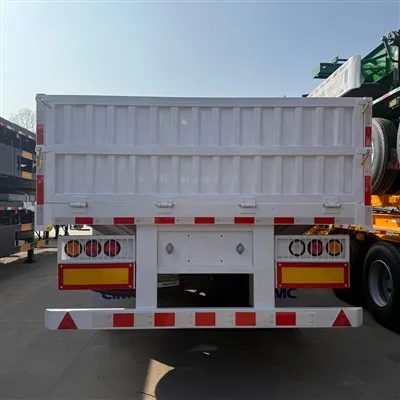
Let’s start with the core lighting components every flatbed trailer must have. First are the clearance lights: these are the small, usually amber or red lights mounted along the top edge of the trailer, front, sides, and rear. Clearance lights aren’t just for decoration; they mark the width and height of the trailer, which is critical because flatbeds can be 8.5 feet wide (the legal limit in most U.S. states) and up to 53 feet long. Without working clearance lights, other drivers might misjudge the trailer’s size, especially when it’s turning or changing lanes. Our team at [Your Company Name] installs LED clearance lights on all our new trailers because they last 10 times longer than traditional incandescent bulbs, draw less power, and are far more resistant to vibration— a big deal for flatbeds that navigate rough job sites and bumpy highways. We also make sure these lights are placed no more than 7 feet apart along the sides, per FMCSA rules, so there are no gaps where the trailer’s outline could be hidden from other drivers.
Next are the marker lights, which are smaller, side-mounted lights that run along the length of the trailer. Unlike clearance lights, marker lights are often located lower down, closer to the deck, to mark the side edges of the trailer’s body. For flatbeds, this is extra important because the open deck means cargo could overhang, so marker lights help drivers and law enforcement confirm the trailer’s correct dimensions. We also install identification lights at the front of the trailer, near the cab’s rear, which let police and weigh station officials easily read the trailer’s registration number without having to leave their own vehicle. A common mistake we see new flatbed operators make is skipping these or installing them too high—ours are mounted 12 to 15 inches above the deck, which is the ideal height for visibility.
Then there are the braking and signaling lights, which are the most critical for preventing rear-end crashes. Flatbed trailers must have brake lights, turn signals, and taillights that align with the truck’s own lights, so other drivers can tell when the trailer is slowing down or turning. Unlike enclosed trailers, flatbeds don’t have a solid body to hide wiring, so we use heavy-duty, waterproof wiring harnesses that are run along the undercarriage, protected from debris and moisture. We also test every trailer’s lighting system before it leaves our lot, making sure the brake lights illuminate immediately when the truck’s brakes are pressed, and turn signals flash at the correct rate. For operators who often tow heavy loads (like 40,000-pound steel beams), we add extra-bright brake lights because they need to be visible from at least 500 feet away in good weather, per FMCSA guidelines.
But wait—flatbed trailers have unique needs that go beyond these basic lights, because their open deck means you’re often transporting oversized cargo, or cargo that’s uneven, extends beyond the trailer’s edges, or could block standard lights. That’s where cargo-specific lighting comes in, and it’s a part of what we design into our custom flatbeds to save our customers time and hassle. For example, if you’re hauling long pipes or lumber that overhangs the rear of the trailer by more than 4 feet, FMCSA requires you to add an additional red light at the end of the overhang, to mark it clearly. Many of our clients transport heavy equipment like excavators or bulldozers, which often have low ground clearance or sit high on the flatbed, blocking the rear lights. To solve that, we install side-mount marker lights on the corners of the flatbed’s frame, so even if cargo is piled high, those lights are still visible from the side and rear. We also offer optional under-deck work lights for job site use—these are LED lights that point downward, illuminating the deck so crews can safely load and unload cargo in low light, without having to bring extra portable generators or work lights. Compliance officers and safety inspectors love these because they reduce the risk of on-site accidents, which in turn keeps your insurance premiums lower.
Another often-overlooked requirement is visibility in poor weather. Flatbed trailers are often used in rain, snow, and dusty conditions, which can obscure lights if they’re not properly protected. That’s why at [Your Company Name], we use polycarbonate lenses for all our lights instead of glass—they’re shatterproof, resistant to scratches from cargo debris, and don’t fog up when temperatures drop. We also seal all light housings with rubber gaskets to keep water out, which prevents short circuits and ensures the lights work even during heavy downpours. We’ve seen too many operators cut corners here, buying cheap lights that stop working after a few runs, which leads to tickets, fines, and safety risks. Our lights come with a 5-year warranty, so you don’t have to worry about replacing them every six months.
What about regulations for international travel? If you’re operating in Canada, Mexico, or across borders, the requirements change slightly. For example, Canada requires additional amber marker lights on the front of the trailer, while some European countries mandate reflective tape in place of some lights for very large cargo. Our team at [Your Company Name] works with every customer to tailor lighting setups to their specific routes, so you’re not caught off guard at a border checkpoint. We also keep up with changes to regulations—last year, FMCSA updated rules for trailer lighting to require LED lights on all new trailers over 10,000 pounds, and we adjusted our production lines immediately to meet that new standard.
Now, why does all this matter to you as a flatbed trailer owner or operator? It’s not just about avoiding fines—though those can add up quickly (a single non-compliant light ticket can cost $100 or more, and multiple violations can lead to being put out of service until repairs are made). It’s also about safety. The National Highway Traffic Safety Administration (NHTSA) reports that over 10% of large truck crashes in low light or bad weather are caused by poor trailer visibility. Our customers often tell us that since they started using our properly lit flatbeds, they’ve had far fewer near-misses and accidents. For a logistics company, that means less downtime, lower insurance costs, and happier clients who rely on on-time deliveries. For construction companies, it means safer job sites and less time spent dealing with paperwork from safety inspections.
If you’re in the market for a new flatbed trailer, or looking to upgrade your current trailer’s lighting to meet current standards, don’t settle for a one-size-fits-all solution. At [Your Company Name], we don’t just sell trailers—we work with you to understand your specific needs, whether you’re hauling heavy equipment across the country, moving raw materials for construction, or making local deliveries. Our experts can walk you through the best lighting setup for your routes, cargo types, and budget, and we can customize features like extra work lights, overhang markers, or reflective tape to meet your unique requirements.
If you’re ready to learn more about how proper lighting can improve your safety, compliance, and bottom line, we’d love to talk. Contact us today to discuss your flatbed trailer needs, and let us help you find the right solution for your business.
Dump Trailer References
Federal Motor Carrier Safety Administration. (2023). Large Truck and Bus Lighting Requirements.
National Highway Traffic Safety Administration. (2022). Visibility-Related Crash Facts for Large Commercial Vehicles.
United Nations Economic Commission for Europe. (2021). International Standards for Commercial Vehicle Lighting.
Construction Equipment Safety Association. (2023). Job Site Lighting Guidelines for Flatbed Transport.
Shandong Huayuanda Automobile Manufacturing Co., Ltd.
As one of the most experienced flatbed trailer manufacturers and suppliers in China, our products have good reputation in the market. We warmly welcome you to buy high quality flatbed trailer at low price from our factory. If you have any enquiry about cooperation, please feel free to email us.
Address: Industrial Park, Quanpu Town, Liangshan County, Jining City, Shandong Province
E-mail: Huayuanda2024@163.com
WebSite: https://www.hydtrailer.com/
