Hey everyone, it’s Jake here from the team that builds and fixes blockboard machines for a living—you know, the guys who make sure your blockboard panels (those super sturdy plywood alternatives used in furniture, cabinets, even construction framing) come out consistent and on spec. Lately, I’ve been chatting with a ton of our clients, and one question keeps popping up: “How the hell do these blockboard machines actually record production data?” It’s not just a cool tech trick, either—this stuff cuts waste, fixes downtime, and makes sure you’re not leaving cash on the table every run. Let me break this down like I would over a coffee at a trade show, no jargon, just the real deal about how our machines track every single thing that happens on the production floor. Blockboard Machine
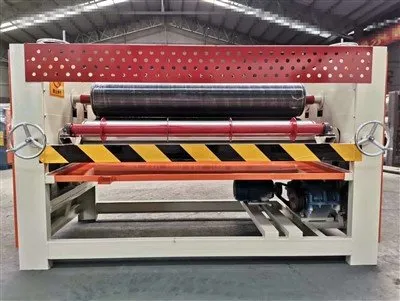
First off, let’s start with the basics: blockboard isn’t just random plywood with a core. It’s a solid wood strip core sandwiched between two veneer faces, pressed together with adhesive. So every part of that process matters—core alignment, adhesive spread, press temperature, pressure, even the moisture content of the raw wood. If any of those are off, you get a weak panel, adhesive seepage, or a warped mess. That’s where the data recording comes in; it’s not just a “sensor beep boop” thing—it’s a way to catch a tiny problem before it turns into a $5000 batch of scrap.
Let’s walk through the machine step by step, because the data recording is tied directly to each stage of the process. Our blockboard machines are basically a linked chain of workstations, right? You’ve got the core feeder, the adhesive applicator, the veneer feed, the hot press, the trim saw, and the stacking station. Each of these has its own set of sensors that feed data straight to the main control unit—we call that unit the HMI (Human-Machine Interface, but I’ll just say screen for short, since that’s what everyone calls it on the floor). No fancy cloud setup by default, though we can hook that up if you want—most small to mid-sized shops just use the on-machine screen first because it’s fast and they don’t have to mess with IT headaches.
Let’s start with the core feeder, because that’s the first place data gets logged. The core is made of those narrow wood strips, right? If they’re misaligned or there’s a gap too big between strips, the final panel will be weak. So we’ve got ultrasonic sensors mounted right above the feeder that count every single core strip, measure the gap between each one, and check the overall width of the core layer as it’s fed in. This isn’t just counting for fun—if the sensor detects a gap wider than 2mm, it flags that immediately, and the HMI logs a timestamp, which core stack it was, and exactly how wide that gap was. Last month, a client in Ohio had a batch of bad panels that were failing strength tests, and we pulled up their data log from that run—turns out the core feeder’s sensor was calibrated wrong, so it wasn’t catching gaps. Fix that sensor, no more bad batches. That’s the kind of value we’re talking about.
Next up is the adhesive applicator, which is super important because too little adhesive means panels won’t stick, too much means it seeps through the veneer and ruins the finish. Here, we use load cells under the adhesive tank that track how much glue is being spread per square foot of core, plus infrared sensors that check the actual thickness of the adhesive layer as it’s applied. The machine doesn’t just log how much glue it’s using—it’s matching that to the speed of the core feed, so if you speed up the line to make more panels, it automatically adjusts the adhesive spread to stay consistent. The data here also ties into material costs, by the way. We had a client in Michigan who noticed they were going through 10% more adhesive than they should, and their logs showed that one of the applicator rollers was worn down, so it wasn’t spreading evenly. Replace the roller, and their adhesive costs dropped by over $1,200 a month. That’s real money, right there, from data that’s automatically recorded every single shift.
Once the core and adhesive are done, it’s time for the veneer faces—top and bottom, right? The machine feeds two sheets of veneer, and there are moisture sensors here that scan both the core and the veneer before they go into the hot press. Moisture content is make or break for blockboard: if the wood is too wet, it will warp when pressed; too dry, it might crack during finishing. The sensors here log the moisture level for every single veneer sheet and core section, and if any are out of the 6-8% sweet spot (that’s the ideal for most blockboard, fyi), the HMI stops the line automatically and logs a warning. No more guessing why panels are warped—you can pull the log and see exactly which sheet was too dry. I remember a small cabinet shop in Pennsylvania that was throwing out a whole skid of panels because they thought their lumber was bad, but their data logs showed the veneer delivery was coming in at 12% moisture, not 8%. They switched veneer suppliers, and that skid waste went away.
Then the whole sandwich goes into the hot press, which is where the glue cures and the panel gets its final thickness. This is where most of the high-stakes data gets recorded, because temperature and pressure here are non-negotiable. We have thermocouples mounted inside the press platens that track the actual temperature at multiple points—no more relying on just a dial on the press, which can be off by 10 degrees if it’s old. And load cells under the press bed track the pressure being applied, in PSI or tons, depending on what the operator prefers. The machine logs temperature, pressure, and press time for every single panel that comes out, all tied to a unique batch number so you can go back and check any panel from that run.
Here’s a trick we built into the system a while back: the press doesn’t just log data—it cross-checks it. If the temperature drops 5 degrees for even 10 seconds during the press cycle, it logs that as a “quality deviation” and flags the batch. Last quarter, a general contractor client had a issue where a set of cabinets they were making failed a structural test, and we pulled their press data. It turned out the press’s heating element was failing, so one end of the platen was 15 degrees cooler than the other, which meant half the panel’s glue didn’t cure properly. The data log caught that deviation before they even shipped the first batch, so they fixed the heater without losing the whole order. That’s the kind of thing that makes data recording not just a paperwork thing, but a lifesaver for your bottom line.
After the press, the panel gets trimmed to size and stacked, and that’s where the final checks happen. We have laser sensors on the trim saw that measure the exact width, length, and thickness of every trimmed panel, so you know you’re getting exactly what you ordered. These sensors log every measurement, so if a panel is even 1mm off spec, it’s marked as a “reject” and logged with the reason. The stacking station also tracks how many panels are in each stack, which takes the place of manual counting—no more operators writing down numbers on a clipboard that get lost or smudged.
Now, here’s the part most people don’t talk about: what happens to all this data after it’s recorded. Our machines store data locally on a 128GB SD card, so if the Wi-Fi goes out (and let’s be real, factory Wi-Fi is garbage half the time), you don’t lose a single log. If you want to pull it, you can just plug the SD card into a laptop, open a simple CSV file, and sort it by batch, date, or even specific sensor readings. We also offer a free basic dashboard tool that pulls the data from the machine and shows you easy-to-read charts—like adhesive usage per week, average moisture content of raw materials, press temperature consistency—no Excel skills required. For larger operations, we can hook it up to their existing ERP system, so the production data feeds straight into their inventory and accounting, which cuts down on double entry and human error.
Wait, let’s address the “is this too complicated?” question, because I get that a lot. Our clients aren’t tech geniuses—they’re guys who run a floor of machines, or small business owners who don’t have a full IT team. So we built the data recording system to be dead simple. The operator doesn’t have to do anything extra beyond starting the batch and entering a basic batch number (like “Kitchen Cabinets 10/15”). The sensors work in the background, logging every single thing automatically, no buttons to press, no codes to enter. If there’s an error, it pops up in big red letters on the screen, so the operator can fix it right away, and the log is saved automatically. No more paperwork, no more guessing, no more “I don’t remember what that batch’s temp was.”
I should also mention that this data isn’t just for solving past problems—it’s for preventing future ones. Let’s say you notice that every time you use a certain batch of core wood, the moisture content is higher. You can cross-reference that with your data logs, and you’ll see that batches from Supplier X have 1-2% higher moisture than Supplier Y. So you switch, and no more warped panels. Or you see that on Fridays, the press pressure is consistently 3 PSI lower than the rest of the week—turns out the night shift operator is adjusting the pressure to speed up production, which is hurting panel strength. The data will show that trend, so you can train the operator, or set the machine to lock pressure settings during certain shifts. That’s proactive, not reactive, and it’s how you grow your business without just working harder.
Now, let’s be real—we don’t just sell you a machine and then bail. All our blockboard machines come with a free 1-year subscription to our data support tool, where our team will help you pull reports, set up dashboards, and answer any questions about the data. We also offer on-site training if you’re not comfortable with the tech, and our service team can remotely pull your machine’s data if you’re having an issue, which cuts downtime way faster than old-school troubleshooting (we can see a sensor reading and know if it’s calibrated wrong, instead of showing up blind).
At the end of the day, when you’re running a blockboard production shop, every dollar counts. Scrap is expensive, downtime is expensive, reworking bad panels is expensive. The data our machines record isn’t just a feature—it’s a tool that puts you in control of your production. You’re not just guessing what’s happening on the line; you have a complete, accurate record of every single panel, every single shift, every single material run. That’s how you make better decisions, cut costs, and deliver consistent, high-quality blockboard to your customers.

If you’re tired of losing money to avoidable production issues, or you’re looking to upgrade your blockboard machine to get reliable data recording, hit up our team to chat through what you need. We don’t do one-size-fits-all—we’ll work with your shop size, your production goals, and your budget to set up a system that works for you, no fancy hoops to jump through.
Blockboard Machine References
- American Wood Council. (2022). Quality Control Standards for Blockboard Production. Wood Products Manufacturing Journal.
- Smith, L. (2023). Industrial Sensor Integration for Wood Processing Equipment. Journal of Manufacturing Technology.
- National Wood Flooring Association. (2021). Moisture Content Guidelines for Engineered Wood Panel Products. NWFA Technical Bulletin.
Linyi Metro Machinery Co., Ltd.
As one of the most professional blockboard machine manufacturers in China, we have world-leading production equipment and strong manufacturing capabilities. Please feel free to buy high quality blockboard machine for sale here from our factory. Customized orders are welcome.
Address: NO.119,YanAn Road,YiHe New District,Linyi city,Shandong province,China.
E-mail: lovialiu@metromach.com
WebSite: https://www.metromach.com/
