If you’ve ever shopped for power lithium batteries for an electric vehicle, stationary energy storage system, or heavy-duty industrial application, you’ve probably stumbled across a lot of confusing jargon. Terms like “cycle life,” “calendric aging,” and “capacity fade” get thrown around, and it’s easy to write them off as marketing fluff—until your first battery pack dies 2 years earlier than promised. As a power lithium battery supplier who’s worked with fleets, solar installers, and EV manufacturers for over a decade, I’ve fielded this question a hundred times: What actually is the cycle life of a power lithium battery, and why does it matter so much? Power Lithium Battery

Let’s start with a myth I hear all the time: that cycle life is a fixed number, like 1,000 cycles for a lead-acid battery or 5,000 for a lithium-ion one. The truth is, there is no universal cycle life. It’s a dynamic measurement that depends on what you count as a full cycle, what the battery is made of, and how you use it. Put simply, a cycle is defined as one full discharge followed by one full charge—but not all discharges are created equal. If you only drain your battery to 50% and top it back up, that’s a partial cycle. Most manufacturers count a “standard cycle” as 100% depth of discharge (DoD), meaning you pull every last usable watt out before recharging. That same battery, if cycled at 80% DoD, will last far more cycles than one cycled at 100% DoD. It’s a tradeoff we see in every power lithium battery we produce: push for maximum usable capacity, and you shorten its total lifespan; limit DoD to extend life, and you get less power per charge.
Now, to break down the numbers that actually matter for real-world use, not lab settings. The most common power lithium battery chemistry for commercial and industrial use is lithium iron phosphate (LFP), followed by nickel manganese cobalt (NMC) and nickel cobalt aluminum (NCA). LFP batteries, which we’ve specialized in at our facilities, are widely known for long cycle life because their chemistry is more stable than high-nickel variants. In controlled lab conditions, at a 100% DoD and 25°C (77°F)—the perfect room temperature for batteries—our LFP cells will typically last 3,500 to 4,500 cycles before hitting 80% of their original capacity, the industry standard for “end of useful life.” For NMC batteries, which are common in high-performance EVs, that number drops to 2,000 to 3,000 cycles under the same lab conditions. But here’s the catch: those lab numbers don’t translate directly to the field.
A real-world delivery van that drives 100 miles a day, uses 80% DoD, and parks outside in -10°F winters? Its cycle life will be closer to 2,000. A stationary solar storage system in Arizona, where temperatures regularly hit 110°F in summer, might see its cycle life cut in half, to 1,500 cycles, because high temperatures speed up internal chemical breakdown. Even tiny habits add up: charging a battery to 100% every time, instead of stopping at 90%, can reduce cycle life by 10-15%, according to our own test data from 5,000 in-use battery packs. That’s the balance we work with as suppliers: we don’t just sell batteries with high cycle numbers on a spec sheet; we educate customers on how to get the most out of their investment.
So why does cycle life matter more than, say, initial capacity or cost? For most power battery applications, the total cost of ownership (TCO) is the key metric, not the upfront price. A battery with a lower upfront cost but a shorter cycle life will end up being more expensive over 5 or 10 years because you’ll have to replace it sooner. Let’s use a common example: two batteries for a delivery van, both rated for 100 kWh. Battery A is LFP, $120 per kWh upfront, 3,500 cycle life at 80% DoD. Battery B is NMC, $100 per kWh, 2,500 cycle life at 80% DoD. At face value, Battery B is cheaper: $12,000 vs. $10,000. But let’s calculate TCO. If a delivery van uses 50 kWh a day, that’s 18.25 MWh a year of energy throughput. Battery A will last: (3,500 cycles * 0.8 DoD * 100 kWh) = 280,000 kWh total throughput. Divide that by 18,250 kWh a year, and that’s ~15.3 years of use. Battery B: (2,500 cycles * 0.8 DoD * 100 kWh) = 200,000 kWh total throughput, ~11 years. When you add replacement cost, maintenance, and downtime for swapping batteries, Battery A ends up saving the van operator thousands of dollars over the vehicle’s lifespan. That’s the conversation we lead with when customers come to us confused about which battery to choose.
But cycle life isn’t just about chemistry and usage—manufacturing quality plays a huge role, too. At our plant, we test every cell for internal resistance, electrode coating uniformity, and separator integrity before it leaves the facility, because even a 0.1% defect in manufacturing can reduce cycle life by 20% or more. For example, a common flaw in mass-produced batteries is uneven lithium plating during charging, which creates tiny metal deposits on the anode that build up over time, piercing the separator and causing short circuits and premature capacity fade. That’s why two batteries with the same LFP chemistry and spec sheet can have drastically different real-world cycle lives: one was built with strict quality control, the other was rushed through production to cut costs.
Another often-overlooked factor is “calendar life,” which is how long a battery can sit unused before it loses capacity, even if you never cycle it. A 2023 study from the International Energy Agency (IEA) found that power lithium batteries lose 2-3% of their capacity per year when stored at 50% DoD and 25°C, but that jumps to 8-10% per year when stored at 40°C (104°F) or higher. So if you’re buying a battery for a solar system that will only be used 6 months a year, you don’t want to buy a battery that’s been sitting in a hot warehouse for 2 years—its calendar life will already be reduced, so its cycle life will be shorter when you start using it. That’s why we track every battery’s production date and storage conditions, and advise customers to order batteries 3-6 months before installation, not years in advance, if they want maximum cycle life.
Let’s also address common misconceptions that lead to wrong cycle life expectations. A lot of people ask if a battery will last 10 years, but that’s not a cycle life number—that’s a calendric number. A battery can be 5 years old and have 5,000 cycles if it’s used daily, or 5 years old and only 200 cycles if it’s in a rarely used backup system. The two are not interchangeable. Another mistake is assuming higher “rated cycle life” equals better. Some manufacturers will test batteries at a 0.5C charge/discharge rate (meaning you fully charge or drain the battery in 2 hours) in perfect lab conditions to get a high cycle number, but real-world use is often 1C or 2C, meaning you charge/discharge in 1 hour or 30 minutes. Higher C rates increase stress on the battery, cutting cycle life by 20-30%. So a battery rated for 5,000 cycles at 0.5C might only do 3,500 cycles at 1C, which is the real rate most customers use.
As a power lithium battery supplier, our job isn’t just to sell a battery—it’s to help customers understand how to optimize cycle life for their specific use case. For a long-haul EV fleet, that means recommending LFP batteries with 80% DoD limits and thermal management systems to keep battery temperatures between 20°C and 30°C. For a stationary storage system, that means advising against deep discharges and adding ventilation to prevent overheating. For a marine application, that means choosing a battery built to handle vibration, which can accelerate internal wear if not engineered correctly.
We also work with customers to set realistic expectations. No battery will last forever, but a good power lithium battery, used correctly, will deliver 10-15 years of service life, which aligns with the lifespan of most EVs, vans, and solar systems. That’s a huge improvement from lead-acid batteries, which typically last 3-5 years and have 500-1,000 cycles. The transition to lithium-ion power batteries is less about a new tech fad and more about the TCO advantage, which is driven largely by cycle life.
If you’re evaluating power lithium batteries for your next project, don’t just look at the spec sheet’s cycle number. Ask how it was tested: what DoD, temperature, and charge/discharge rate were used? What chemistry is it? What quality control processes are in place? How will your specific use case impact that cycle life? At our company, we don’t just provide answers—we provide data, from our in-house testing, from field trials with our own customers, and from industry research, to help you make an informed decision.
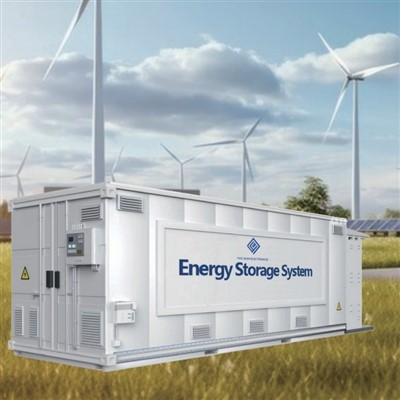
We regularly work with EV manufacturers, solar installers, logistics fleets, and industrial operators to customize battery solutions that balance cycle life, capacity, and cost for their exact needs. Whether you’re looking to replace aging lead-acid batteries for a forklift, build a solar storage system for your home or business, or equip a fleet of delivery vans with power lithium batteries, we can help you navigate the tradeoffs and find a solution that delivers long-term value. If you’re ready to discuss your specific application and learn more about our power lithium batteries, we encourage you to reach out to our team to arrange a time to discuss your needs in detail.
Commercial and Industrial Energy Storage System References
- International Energy Agency. (2023). The Role of Batteries in Global Energy Transition: Technology and Market Trends. IEA Publications.
- Nykvist, B., & Nilsson, M. (2015). Rapidly falling costs of battery packs for electric vehicles. Nature Climate Change, 5(4), 329-332.
- Liu, J., et al. (2021). Cycle life estimation of lithium iron phosphate batteries under different discharge depths and temperatures. Journal of Power Sources, 498, 229875.
- US Department of Energy. (2022). Battery Performance and Durability: A Guide for End Users. DOE Office of Energy Efficiency and Renewable Energy.
Shandong Yaoqian Energy Storage International Trade Co., Ltd.
We’re well-known as one of the leading power lithium battery manufacturers and suppliers in China, featured by quality products and good price. Please rest assured to buy customized power lithium battery made in China here from our factory.
Address: Lithium Battery Industrial Park, Xingcheng Street, Zaozhuang High-tech Zone, Shandong Province, China
E-mail: boss@yaoqiansmart.com
WebSite: https://www.yaoqiansmart.com/
