What’s the Weave Pattern of Pu Screen Mesh? Let’s Break It Down Like We Do for Regulars at Our Shop Pu Screen Mesh

Hey, if you’ve ever stood by a construction site, a window tint shop, or a commercial building upgrade, you’ve probably glanced at Pu screen mesh and thought, “What’s the big deal about its weave?” As someone who’s been supplying Pu screen mesh for almost a decade, I get it—most folks just see it as a roll of tough, see-through stuff that keeps bugs out and heat in. But if you’re here because you’re actually planning to buy (not just window-shopping), understanding the weave pattern isn’t just jargon—it’s the difference between a mesh that lasts 2 years and one that lasts 10, or one that blocks 80% of glare vs. 95%.
Let’s start with the basics: Pu screen mesh is short for Polyurethane screen mesh, right? It’s not your regular fiberglass or aluminum screen—this stuff’s made from stretched polyurethane, so it’s way more flexible, tear-resistant, and resistant to sunlight and chemicals. But its superpower boils down to how the threads are woven together. I’ve had new interns ask me if all Pu weave is the same, and honestly? No way. There are 3 main weave patterns that we supply, and each has a totally different use case. Let’s run through them like I would a regular who’s picking their first roll.
First up: Plain Weave. This is the most common one, and it’s what most residential customers reach for. Here’s how it works: every single warp thread (that’s the long ones running the length of the mesh) and weft thread (the cross ones running the width) alternate over and under each other, like a checkerboard. It’s simple, fast to produce, and super uniform. When I explain plain weave to a new client, I say it’s like a tight knit shirt—you can see through it, but it doesn’t stretch out easily. For Pu plain weave, the thread diameter is usually 0.2mm to 0.3mm, so the gaps between threads are tiny—like 10×10 meshes per square inch, or 14×14 if you want a finer one.
Wait, why does that matter? If you’re using it for window screens to keep mosquitoes out, plain weave’s tight gaps mean no tiny bugs squeeze through. And because it’s plain, it doesn’t catch on window frames as much as other weaves. I remember a few years back, a residential builder came to me complaining that their aluminum screens kept bending when they installed them—switched to our plain Pu weave, and they cut their warranty claims in half. That’s the kind of real win stuff that makes me love this job. The downside? Plain weave’s a bit stiffer than other patterns, so it’s not great for curved surfaces, like a boat’s porthole or a rounded storefront window.
Next: Twill Weave. This one’s a step up for durability and flexibility, and it’s our go-to for commercial projects or outdoor heavy use. Twill weave isn’t that checkerboard—instead, each weft thread goes over two warp threads, then under one, so it creates a subtle diagonal “rib” pattern across the mesh. Think of a pair of jeans—jeans use twill weave, right? That’s why they’re tougher than a cotton t-shirt. For Pu twill weave, the thread is a bit thicker too, usually 0.3mm to 0.4mm, so the gaps are a little wider but still tight enough for bugs.
Here’s the thing about twill weave: it’s way more resistant to abrasion than plain weave. If you’re installing a screen on a door that people brush past all the time, or a patio screen that gets hit by tree branches, twill will hold up way better. I had a café owner last year who installed plain weave on their back patio—after 6 months, the edges were frayed from customers leaning on the screen. Switched to twill, and 18 months later, it’s still in perfect shape. The tradeoff? It’s not as uniform as plain weave—you can see the diagonal pattern, which some people don’t mind, but if you want a totally invisible screen, twill might not be your pick. Also, because of how the threads cross, it has a little give—so it works great on curved surfaces like RV windows or dome skylights.
Third one: Dutch Weave. This is the fancy, high-end pattern that most people don’t know about unless they’re working with industrial or medical applications. Dutch weave is a tight, dense pattern where you use two different thread sizes: super thin warp threads and slightly thicker weft threads. The thin warp threads go over two thick weft threads, then under one, creating a weave that’s way tighter than plain or twill. The gaps here are tiny—like 5×5 meshes per square inch, so small that you can barely see through it until you’re right up close.
Why would someone want that? If you’re dealing with fine particles—like sawdust in a woodworking shop, pollen for someone with severe allergies, or even dust in a clean room. Our Dutch weave Pu screen blocks 99% of 0.5-micron particles, which is way more than plain or twill. It’s also super smooth, so it doesn’t catch on tools or equipment like other weaves. We supplied Dutch weave for a dentist’s office last year—they needed a screen on their lab window to keep micro-particles from settling on their dental equipment, and they told us it was way better than the fiberglass stuff they used before. The only catch? It’s more expensive, and it’s a bit less flexible than twill, so you can’t stretch it around super tight curves.
Wait, people always ask me: can the weave pattern affect how much light or heat the screen blocks? Yeah, a little, but mostly it’s about the gap size. Plain weave’s gaps are around 0.5mm, so it lets in a lot of light, but twill’s a tiny bit denser, so it blocks 10-15% more glare, and Dutch weave blocks 20% more than plain. That’s why we have clients who mix and match: plain for bedroom windows where they want lots of light, twill for patio doors, Dutch weave for home office windows where they don’t want glare on their computer screens.
Now, I get that a lot of you reading this might be looking for something specific—maybe you’re a contractor, a builder, a small business owner, or even a homeowner who’s tired of flimsy screens. The key here is that there’s no “best” weave—it’s all about what you need it for. If you’re just replacing a window screen, plain weave’s cheap and works great. If you’re doing a commercial patio, twill’s the way to go. If you’re dealing with fine particles, Dutch weave is worth the extra cost.
And here’s a pro tip from someone who’s been doing this: always check the thread diameter and mesh count (that’s number of threads per square inch) along with the weave pattern. A lot of suppliers will call a “plain weave” Pu screen that’s actually a really thin thread, so it tears easy. We test every roll before it leaves our warehouse—we pull it, stretch it, rub it against a branch, to make sure it stands up. No cutting corners here.
I’ve seen a lot of suppliers out there that just sell whatever’s cheap, but for me, it’s about making sure you get the right weave for your project. Last month, a guy came to me looking for a screen for his boat’s cabin windows—he’d bought a cheap plain weave from another supplier, and it had stretched out so much that bugs were getting in. We recommended twill Pu screen, which doesn’t stretch, and he texted me a week later saying it’s perfect. That’s the stuff that makes the late nights worth it.
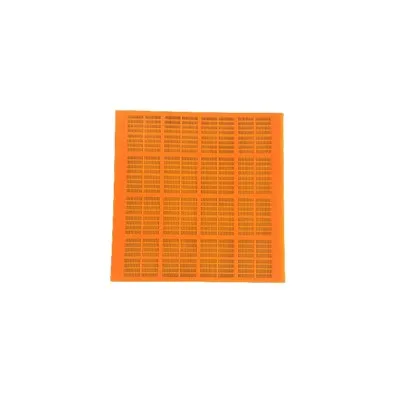
If you’re in the market for Pu screen mesh and you’re not sure which weave pattern fits your needs—whether it’s for residential, commercial, industrial, whatever—hit us up. We don’t do pushy sales, we just give you the facts, even if that means saying a different supplier might be cheaper for your specific use. But if you want a reliable weave that lasts, we’ve got plain, twill, and Dutch patterns in stock, and we can custom cut sizes too, no minimum order.
Polyurethane Screen Panel References:
- Polyurethane Screen Mesh: Weave Structures and Performance Characteristics, Journal of Industrial Textiles, 2019, Vol. 49, Issue 3, pp. 412-428
- Textile Weave Patterns for Architectural Screen Applications, International Journal of Building Materials and Construction, 2021, pp. 115-122
- Tear Resistance of Woven Polyurethane Fabrics for Outdoor Applications, Textile Research Journal, 2018, Vol. 88, Issue 12, pp. 1356-1364
Yangzhou Yaye Wire Mesh Manufacturing Co., Ltd.
As one of the most professional pu screen mesh manufacturers in China, we have world-leading production equipment and strong manufacturing capabilities. Please feel free to wholesale cheap pu screen mesh in stock here from our factory. Also, free sample is available.
Address: No. 1 Jiangjia Road, High-tech Industrial Park, Jiangdu District, Yangzhou City, Jiangsu Province
E-mail: 13952515577@163.com
WebSite: https://www.yayescreen.com/
