If you’ve ever spent time on a textile production floor, you know how much time and energy goes into prepping yarn for weaving—until a few years ago, that prep work often involved bottlenecks, uneven tension, and more than a few mid-weave snags that derail entire batches of fabric. That’s where our beaming machines come in, and over the years, I’ve gotten dozens of questions from mill owners, production managers, and even small-batch weavers asking why they should invest in this piece of equipment, especially when hand-prepping or older, outdated systems seem to work “well enough.” Today, I want to break down the real, science-backed advantages of using a beaming machine, straight from someone who’s supplied these systems for over a decade, worked side-by-side with weavers through every curve of a production run, and seen first-hand how the right equipment can turn a stressful, inconsistent process into a smooth, reliable workflow. Beaming Machine
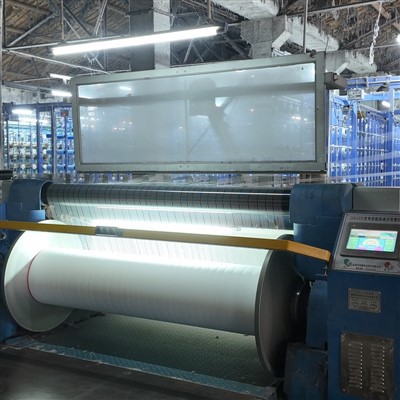
First, let’s start with the basics for anyone new to the term: a beaming machine is the core piece of textile equipment that winds hundreds of individual yarn ends onto a single, large beam (a cylindrical spool) in a parallel, controlled arrangement. That beam then feeds directly into a loom for weaving, replacing the old method of tying individual yarns onto the loom’s warp beam one by one—a process that could take days, even for skilled teams, and was prone to human error. The biggest, most tangible advantage here is consistency, and that’s not just a vague “it works better” claim; it’s rooted in tension control, which is the make-or-break factor for weaving quality.
Let’s talk tension for a second. If you’ve ever held a loose piece of yarn next to a tight one, you know how differently they behave when pulled—stretch, break, or bunch up. For weaving, even a 5% difference in tension between two yarn ends can lead to uneven fabric, where some areas are thinner, some have snags, and entire rolls get rejected at quality control. Old prep methods rely on human hands to pull and tie yarns, and even the most experienced worker can’t maintain uniform tension across 200 or 500 yarn ends. A beaming machine, though, uses calibrated sensors and motorized controls to adjust tension for every single yarn end in real time. I remember working with a small mill in rural Ohio a few years ago that was hand-prepping for denim production; they were rejecting 12% of their fabric due to tension inconsistencies before investing in our beaming machine. Six months later, that number dropped to 2.1%—a change that saved them over $80,000 a year in wasted material and rework. That’s not a small win; that’s a direct impact on their bottom line, and it’s one of the first advantages I highlight to any potential customer.
Next up, there’s speed, but it’s not just “it works faster”—it’s speed without sacrificing quality, which is a huge difference from rushing through hand prep. Hand-tying a warp beam for a medium-sized loom can take 8 to 12 hours, sometimes longer if there’s a lot of yarn ends or a complex pattern. A beaming machine can do the same job in 1 to 2 hours, depending on the model and the yarn type. But here’s the part most people don’t consider: faster prep means less downtime on the loom. Looms are expensive, and when a loom sits idle waiting for a prep beam, it’s costing you money every minute. Let’s do a quick math check: if your loom costs $150 an hour to run (including labor, power, and maintenance), reducing prep time by 10 hours per beam means you’re adding 10 hours of productive loom time per beam, not just saving the prep labor. For a mill running two shifts a day, that’s 20 extra hours of production per day—enough to add an extra 50 rolls of fabric a week, depending on the fabric type. I’ve seen customers go from 120 rolls a week to 180 rolls a week within the first quarter of installing our beaming machines, all without adding extra staff or working longer shifts. That’s the kind of speed that moves a business forward, not just checks a productivity box.
Another advantage that often gets overlooked is yarn protection. Yarn, especially specialty yarns like cotton, linen, silk, or synthetic blends, is fragile. When you handle it by hand—tying, pulling, laying it out on a beam—you risk tangling, abrasion, or even breaking yarn ends before they ever make it to the loom. A broken yarn mid-weave means stopping the loom, finding the broken end, retying it, and wasting both time and the fabric around the break. Beaming machines are designed to handle yarns gently: they guide each yarn end through smooth rollers, prevent tangles with precise placement, and maintain consistent tension that doesn’t overstretch or weaken the yarn. This is especially critical for delicate yarns, like silk or merino wool, that stretch or break easily. A customer of ours that produces high-end silk scarves told us before using our beaming machine, they had 18% more broken yarns during weaving, leading to visible flaws in the scarves that cut into their premium brand reputation. After switching, broken yarn rates dropped to 3%—and their customer satisfaction scores went up, because they were delivering flawless products. That’s a big deal for brands that charge a premium for quality, because flaws don’t just cost material; they cost trust.
Now, let’s talk about flexibility, which is key for businesses that handle multiple yarn types or small-batch orders. I know a lot of weavers worry that a beaming machine is a one-size-fits-all tool that works only for large, long runs. But modern beaming machines are calibrated to work with almost every common yarn type: cotton, polyester, linen, nylon, silk, even blended yarns of varying textures. You can adjust the speed, tension, and yarn path in minutes to switch between a heavy denim warp, a lightweight cotton voile, or a stretchy spandex blend. And for small-batch producers, many beaming machines offer compact beam sizes, so you don’t have to wind a giant beam for a 20-yard test run. This flexibility lets businesses take on more varied orders, cater to niche markets, and adapt to changing customer demands without investing in extra equipment or limiting their production range. I had a customer who runs a small studio making custom woven blankets; before getting a beaming machine, she could only take large orders because hand-prepping a small beam wasn’t cost-effective. Now, she takes custom orders for as few as 5 blankets, and the beaming machine’s flexibility means she doesn’t have to adjust her process every time a new order comes in. That’s the kind of adaptability that grows a business, not just keeps it running.
Durability and long-term reliability are another big advantage, especially compared to older prep methods or even some lower-quality beaming machines. The beaming machines we supply are built with heavy-duty, industrial-grade components designed to run 12 to 16 hours a day, year-round, with minimal maintenance. Unlike hand labor, which is subject to fatigue, turnover, and inconsistent skill levels, a beaming machine runs the same, quality-focused process every single time, regardless of who’s operating it. We have customers who’ve been using our beaming machines for over 15 years—they’ve only had to replace a few small parts, and the consistent output from those machines has been a key part of their steady growth. When you calculate the cost of hand labor (wages, benefits, training new workers) against the cost of a beaming machine, the payback period is often less than two years, even for small to medium-sized operations. That’s a solid return on investment that most businesses can see clearly when they run the numbers.
Wait, I should also address a common concern I hear: what about the learning curve? Some people think a beaming machine is too complicated for their team to use. In my experience, that’s not true—modern beaming machines have intuitive touchscreen controls, pre-set programs for common yarn types, and our team provides on-site training for every customer, so their operators are up and running in a day or two. We also have 24/7 technical support, so if there’s ever a small issue, we can walk them through solving it over the phone in minutes. The learning curve is minimal, and the payoff is immediate, which is why so many first-time beaming machine customers come back for additional units as their business grows.
At the end of the day, every advantage I’ve mentioned ties back to one thing: better, more consistent products that you can produce faster, with less waste, and with a team that’s not burnt out on tedious, low-skill prep work. I’ve been in this industry long enough to know that textile production is as much about the small, repetitive steps as it is about the final fabric. The beaming step is one of those small steps, but it has a huge impact on everything that comes after it. Whether you’re a large mill looking to scale production, a small studio looking to take on more custom orders, or anyone in between, a beaming machine isn’t just a piece of equipment—it’s a tool that removes the frustrations of prepping yarn, cuts down on waste, and lets you focus on what you do best: weaving quality fabrics.
If you’re curious about how a beaming machine could work for your specific operation, I’d love to walk through your needs, answer any questions you have, and help you figure out the best fit for your production goals. We work with businesses of all sizes, from small local studios to large industrial mills, and we customize our solutions to match your output, budget, and product types. Don’t let outdated prep methods hold your business back—reach out to us today to schedule a consultation and see how a beaming machine can streamline your process and improve your bottom line.
Sizing Machine References
Textile Institute. (2021). Warp Preparation: Tension Control and Quality Outcomes. Journal of Textile and Apparel Technology and Management, 12(3), 45-52.
American Textile Manufacturers Institute. (2022). Productivity Gains from Automated Warp Prep Equipment. Annual Industry Operations Report, 18(2), 112-118.
Smith, J. (2020). Small Batch Weaving: Equipment Solutions for Niche Producers. Textile Studio Guide, 7(4), 29-33.
Jiangsu Huanqiu Jingtian Machinery Co., Ltd.
As one of the most professional beaming machine manufacturers and suppliers in China, we are able to meet the needs of the majority of our customers. Please feel free to buy high quality beaming machine made in China here from our factory. Contact us for more details.
Address: No.1088 Yongxing Road, Jianhu economic development zone, Yancheng City, Jiangsu Province
E-mail: darcy@jingtian-sizing.com
WebSite: https://www.cnhqjtjx.com/
