If you’ve ever stood on a production floor watching a batch of goods leave a drying unit only to find some edges still damp, or a load that’s over-dried to a crisp, you know how much a poorly performing drying machine can throw off your entire operation. I’ve been selling industrial drying equipment for 12 years now, and the question I hear most from plant managers, maintenance leads, and production supervisors isn’t just “which dryer should I buy”—it’s “how do I actually tell if this machine will hold up long-term and do the job I need it to?” Drying Machinery
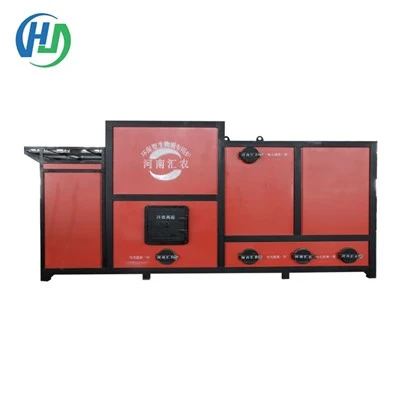
I’ve seen too many buyers fixate only on upfront price or raw capacity numbers, and then end up with a unit that costs them more in wasted energy, downtime, or bad product runs a year later. Over time, I’ve learned there are six core quality indicators that separate a dryer that’s a workhorse from one that’s a headache, and these apply no matter if you’re drying food grains, pharmaceutical powders, wood pulp, or industrial chemicals. Let’s break them down, the way I explain them to my customers when we sit down to talk through their needs.
First up is moisture uniformity and consistency—this is the non-negotiable baseline. It’s not enough that a dryer can take a wet material and get it to the target moisture level somewhere in the load. If you’re drying snack food ingredients, for example, a 2% moisture difference between the top and bottom of a single tray can make half the batch too brittle to cut and the other half too soft to package. For pharmaceutical excipients, that same inconsistency can mean failed quality control tests at the lab, which costs you days of production and hundreds of thousands in wasted materials.
I test this with every demo unit we bring to a customer’s site: I run a standard load, then pull 10 random samples from different parts of the dryer’s chamber and each tray, and test each one for moisture content. A high-quality dryer will have a standard deviation of less than 0.5% across all samples. If that number’s higher—say 1.5%—that machine is just shifting moisture around, not actually drying evenly. I’ve had customers tell me their previous dryer “worked fine” for years, only to realize their product rework rates doubled when they scaled production, and the problem was never the material—it was the dryer’s poor air flow distribution. That’s why uniformity isn’t a “nice-to-have”; it’s the first thing you should check before anything else.
Next is energy efficiency, which isn’t just about cutting utility bills—it’s about long-term reliability. Drying is one of the most energy-intensive processes in manufacturing, accounting for up to 25% of total energy use in many food processing and chemical plants. A lot of dryer manufacturers will throw out a raw BTU number and call it efficient, but that’s useless if the machine leaks hot air through gaps in the door or uses more power than necessary to circulate air.
The right way to measure this is thermal efficiency, which is the percentage of energy the dryer uses that actually goes into evaporating moisture from your product, not being lost to the surrounding air or exhaust. Top-tier drying units hit thermal efficiencies of 60% or higher; cheaper models often clock in at 35-40%, which means you’re paying almost twice as much to do the same work. I also look at whether the dryer has smart features like variable speed fans or heat recovery systems—those small add-ons can boost efficiency by 15-20% and pay for themselves in 18 to 24 months. Last year, I worked with a small grain elevator that switched to a more efficient cross-flow dryer; their annual energy bill dropped by $12,000, and the payback period was 10 months. That’s the kind of number that makes a real difference to a bottom line, not just a sales sheet.
Third is material handling and product integrity—this is make-or-break for sensitive goods. If you’re drying fragile items like fresh herbs, ceramic components, or specialty powders, a dryer that’s too rough will damage your product, leading to scrap. I remember a customer a few years back who was drying organic lavender buds; their first dryer was a standard belt dryer that tore the buds apart, turning a premium product into unmarketable dust. When we installed a fluidized bed dryer with adjustable air velocity and gentle air flow, their damage rate went from 18% to less than 2% and they were able to charge 30% more for their whole buds.
For products that can’t be exposed to contaminants—think pharmaceuticals or food-grade materials—you also have to check the dryer’s sanitary design. No sharp edges, crevices where food or powder can get stuck and mold, or materials that react with the product. I only sell dryers with 304 or 316 stainless steel contact surfaces, smooth welds that are polished to a food-safe finish, and easy-to-remove trays or chambers for cleaning. If a dryer takes four hours to take apart and clean between runs, you’re losing production time every shift, so accessibility is a big part of this indicator too.
Fourth is structural and component reliability, which translates to less downtime and lower maintenance costs. A dryer is a long-term investment—most customers expect a unit to last 10 to 15 years with proper care. The difference between a $20,000 dryer and a $25,000 one often comes down to the quality of its parts: not the frame, but things like the heating elements, fan motors, belt drives, and control systems.
I always ask potential customers to check the lifespan of key components. For example, standard electric heating elements last around 20,000 hours, while high-density ceramic elements can last 50,000 hours, cutting down on replacement costs. Fan motors with sealed bearings don’t need lubrication for their entire lifespan, which means less maintenance work and fewer unexpected breakdowns. I also look at the frame of the dryer: if it’s made from thin, cold-rolled steel that will rust after two years, it’s going to warp and shift, throwing off air flow and uniformity over time. A heavy-gauge steel frame with a powder coat finish will last decades, even in high-humidity environments like paper mills or seafood processing plants.
Then there’s the control system, which is the brain of the dryer. A good PLC (programmable logic controller) system lets you adjust temperature, air flow, and drying time in real time, and has features like alarms for when the load is dry, or if there’s a drop in air flow. A lot of cheap dryers use manual controls—just a dial for temperature and a timer—which means if a load needs a little extra time, you have to stand there monitoring it, or end up with over-dried product. I’ve seen customers save 10 hours a week in labor alone by switching to a dryer with a smart control system that automatically adjusts settings based on real-time moisture readings.
Fifth is scalability and adaptability for future needs. I can’t tell you how many times a customer buys a dryer that fits their current production, then six months later they expand and find the unit can’t handle a larger batch. A good quality dryer should be flexible enough to grow with your operation, not just meet your current needs.
For example, if you’re a craft baker now making 500 pounds of dough per batch, but you plan to expand to 2,000 pounds in two years, you want a dryer that can be modified with extra trays, a larger fan, or an upgraded heating system down the line, instead of having to replace the whole unit. I also work with customers who process multiple different products—like a grain mill that does corn, wheat, and oats. A dryer with adjustable air flow and temperature settings can be reconfigured for each product in 15 minutes, instead of having to swap out parts every time, which saves a lot of downtime.
The last indicator, and one that’s often overlooked, is after-sales support and technical service. A dryer is only as good as the people who can fix it when something breaks. I’ve seen customers buy a cheap dryer from a overseas manufacturer that goes out of business two years later, leaving them with a unit that can’t be repaired because no one has the parts or the knowledge to work on it. When a customer buys from me, I don’t just deliver the dryer and leave. We do a full installation, train their operators on how to use the controls and maintain the machine, and have a 24/7 support line if they have an issue. If a part breaks, I can ship a replacement within 48 hours, not 4 weeks. Last winter, a customer in Michigan had a fan motor fail during a peak drying season—we had a new motor on their loading dock before the end of the day, so they didn’t lose a single day of production. That kind of support isn’t a bonus; it’s a core part of a quality dryer purchase.
I’ll be honest with you: I don’t push the most expensive dryer on every customer. If someone has a small operation drying 100 pounds of herbs a month, a high-end industrial dryer is overkill. But I do push them to look at these six indicators, not just the price tag. Too many buyers think a dryer is a commodity, but it’s a piece of equipment that directly impacts your product quality, your costs, and your ability to meet customer orders.
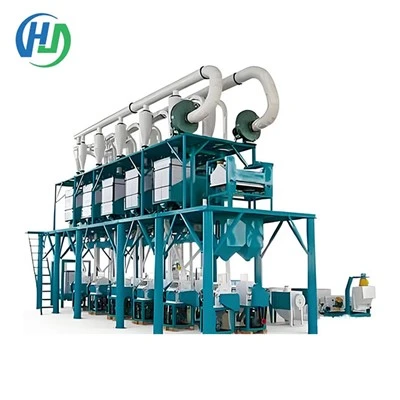
Grain Dryer Supporting Equipment If you’re in the market for a drying machine and want to talk through what these indicators mean for your specific operation, I’m here to help. Whether you’re a small craft producer looking for a unit to start with, or a large manufacturing plant expanding your line, I can walk you through demo tests, energy calculations, and support plans that fit your needs. Don’t let a bad dryer derail your business—reach out so we can find the right solution for you.
References
- ASTM International. (2020). Standard Practice for Testing Thermal Efficiency of Industrial Drying Equipment. ASTM E2855-20.
- Food and Agriculture Organization of the United Nations. (2018). Industrial Drying Technologies for Agricultural Products. FAO Agricultural Engineering Bulletin No. 154.
- American Society of Heating, Refrigerating and Air-Conditioning Engineers. (2021). Energy Efficiency Considerations for Industrial Process Drying. ASHRAE Journal, Vol. 63, No. 4.
- Karim, M. A., & Hawlader, M. N. A. (2013). Drying Technology: Principles, Applications, and Design. CRC Press.
- National Institute for Occupational Safety and Health. (2019). Sanitary Design of Food Processing Equipment. NIOSH Publication No. 2019-105.
Henan Huinong Machinery Co., Ltd.
Henan Huinong Machinery Co., Ltd. is one of the most professional drying machinery manufacturers and suppliers in China, featured by quality products and low price. Please rest assured to buy discount drying machinery from our factory. We also accept customized orders.
Address: No. 6, Northeast Corner of the Intersection of Renmin Road and Zhujiang Road, New District, Huaxian County, Henan Province
E-mail: frank.tang@huinongmachinery.com
WebSite: https://www.huinongmachinery.com/
