As a supplier of PVC gypsum board production lines, I often get asked about the energy consumption of these lines. Energy consumption is a crucial factor for any manufacturing process, not only from a cost – effectiveness perspective but also in terms of environmental impact. In this blog, I will delve into the energy consumption aspects of a PVC gypsum board production line. PVC Gypsum Board Production Line
Components of a PVC Gypsum Board Production Line
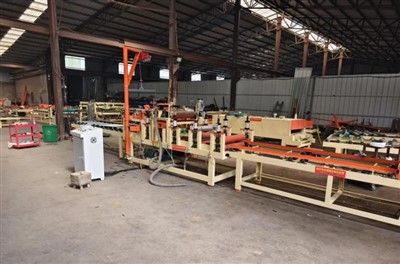
Before we discuss energy consumption, it’s important to understand the main components of a PVC gypsum board production line. The production line typically consists of a raw material mixing system, a forming machine, a drying system, a cutting machine, and a packaging unit. Each of these components plays a vital role in the production process and has its own energy requirements.
The raw material mixing system is responsible for blending PVC resin, gypsum powder, additives, and other necessary materials. This system usually includes mixers and conveyors. The mixers need to operate at a certain speed to ensure a homogeneous mixture, and the conveyors are used to transport the raw materials to different parts of the production line.
The forming machine takes the mixed raw materials and shapes them into boards. This process requires mechanical power to drive the rollers and other forming components.
The drying system is perhaps the most energy – intensive part of the production line. It is used to remove the moisture from the formed boards to ensure their strength and quality. Drying can be achieved through various methods such as hot air drying, infrared drying, or a combination of both.
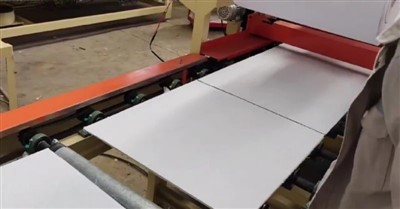
The cutting machine is used to cut the dried boards into the desired sizes, and the packaging unit is responsible for wrapping the finished boards for storage and transportation.
Energy Consumption of Each Component
Raw Material Mixing System
The energy consumption of the raw material mixing system mainly comes from the motors of the mixers and conveyors. The power of the mixers can vary depending on the capacity of the production line. For a medium – sized production line, the mixer motor might have a power rating of around 15 – 30 kilowatts (kW). Conveyor motors usually have lower power ratings, typically in the range of 2 – 5 kW. Assuming the mixers run for about 6 – 8 hours a day and the conveyors run continuously during the production process, the daily energy consumption of the raw material mixing system can be estimated as follows:
Let’s assume a mixer with a power of 20 kW runs for 7 hours a day, and conveyors with a total power of 3 kW run for 8 hours a day. The energy consumption of the mixer is (20\times7 = 140) kilowatt – hours (kWh), and the energy consumption of the conveyors is (3\times8=24) kWh. So, the total daily energy consumption of the raw material mixing system is (140 + 24=164) kWh.
Forming Machine
The forming machine requires mechanical power to operate its rollers and other forming components. The power of the forming machine depends on the speed and complexity of the forming process. For a standard PVC gypsum board forming machine, the power rating can be around 20 – 40 kW. If the forming machine runs for 8 hours a day, with a power of 30 kW, the daily energy consumption is (30\times8 = 240) kWh.
Drying System
The drying system is the most energy – consuming part of the production line. As mentioned earlier, different drying methods have different energy requirements. Hot air drying is a common method, which uses heaters to heat the air and blow it over the boards. Infrared drying uses infrared radiation to directly heat the boards.
For a hot air drying system, the heaters can have a power rating of several hundred kilowatts. Let’s assume a hot air drying system with a total heater power of 200 kW. If it runs for 10 hours a day, the daily energy consumption is (200\times10=2000) kWh.
Infrared drying systems are generally more energy – efficient than hot air drying systems. However, they also require a significant amount of power. A typical infrared drying system for a PVC gypsum board production line might have a power rating of 100 – 150 kW. If it runs for 8 hours a day, with a power of 120 kW, the daily energy consumption is (120\times8 = 960) kWh.
Cutting Machine and Packaging Unit
The cutting machine and packaging unit have relatively lower energy consumption compared to the previous components. The cutting machine usually has a power rating of 5 – 10 kW, and the packaging unit might have a power rating of 3 – 5 kW. Assuming the cutting machine runs for 6 hours a day with a power of 8 kW and the packaging unit runs for 8 hours a day with a power of 4 kW, the daily energy consumption of the cutting machine is (8\times6 = 48) kWh, and the energy consumption of the packaging unit is (4\times8=32) kWh. The total daily energy consumption of these two units is (48 + 32=80) kWh.
Total Energy Consumption of the Production Line
To calculate the total daily energy consumption of the PVC gypsum board production line, we sum up the energy consumption of each component. Using the examples above, the total daily energy consumption is (164+240 + 2000+80=2484) kWh if a hot air drying system is used, and (164+240+960 + 80=1444) kWh if an infrared drying system is used.
Factors Affecting Energy Consumption
Several factors can affect the energy consumption of a PVC gypsum board production line.
Production Capacity
The larger the production capacity of the line, the higher the energy consumption. A high – capacity production line needs more powerful motors and larger drying systems to meet the production requirements.
Drying Method
As mentioned earlier, different drying methods have different energy efficiencies. Infrared drying is generally more energy – efficient than hot air drying because it directly heats the boards, reducing heat loss.
Equipment Efficiency
The efficiency of the equipment also plays a significant role in energy consumption. Well – maintained and high – quality equipment usually consumes less energy. For example, a mixer with a high – efficiency motor will use less electricity to achieve the same mixing effect.
Raw Material Properties
The properties of the raw materials, such as moisture content, can affect the energy consumption of the drying system. If the raw materials have a high moisture content, more energy will be required to dry the boards.
Strategies to Reduce Energy Consumption
As a supplier, we are committed to helping our customers reduce the energy consumption of their PVC gypsum board production lines. Here are some strategies that can be implemented:
Upgrade Equipment
Investing in high – efficiency equipment can significantly reduce energy consumption. For example, replacing old mixers and motors with more energy – efficient models can save a considerable amount of electricity.
Optimize Drying Process
Choosing the right drying method and optimizing the drying parameters can reduce energy consumption. For instance, adjusting the temperature and airflow in a hot air drying system can improve its efficiency.
Energy Management System
Implementing an energy management system can help monitor and control the energy consumption of the production line. This system can detect energy – wasting areas and provide real – time feedback to operators.
Conclusion
The energy consumption of a PVC gypsum board production line is a complex issue that depends on various factors such as the components of the line, production capacity, drying method, and equipment efficiency. By understanding these factors and implementing appropriate strategies, it is possible to reduce energy consumption and improve the cost – effectiveness and environmental performance of the production process.
PVC Gypsum Board Production Line If you are interested in purchasing a PVC gypsum board production line and want to discuss how to optimize its energy consumption, feel free to contact us. We have a team of experts who can provide you with detailed information and customized solutions.
References
- "Energy – efficient Manufacturing Processes", Industrial Energy Efficiency Handbook.
- "Advances in Drying Technology for Building Materials", Journal of Building Materials Research.
Hebei Enjoy Technology Co., Ltd.
Hebei Enjoy Technology Co., Ltd. is one of the most professional manufacturers and suppliers of PVC gypsum board production line in China. With abundant experience, we warmly welcome you to buy high quality building material machinery made in China here from our factory. Contact us for more details.
Address: Jiuling Building, Xinhua District, Shijiazhuang City, Hebei Province, China
E-mail: Betty@seyibm.com
WebSite: https://www.enjoymachinery.com/
